Voided & Deleted Invoices
When an invoice is voided or deleted in your accounting system, the next sales sync detects the change and reverses the sale in Partsemble. This restores inventory, undoes lot consumption, and corrects your margin data — keeping everything in sync without manual intervention.
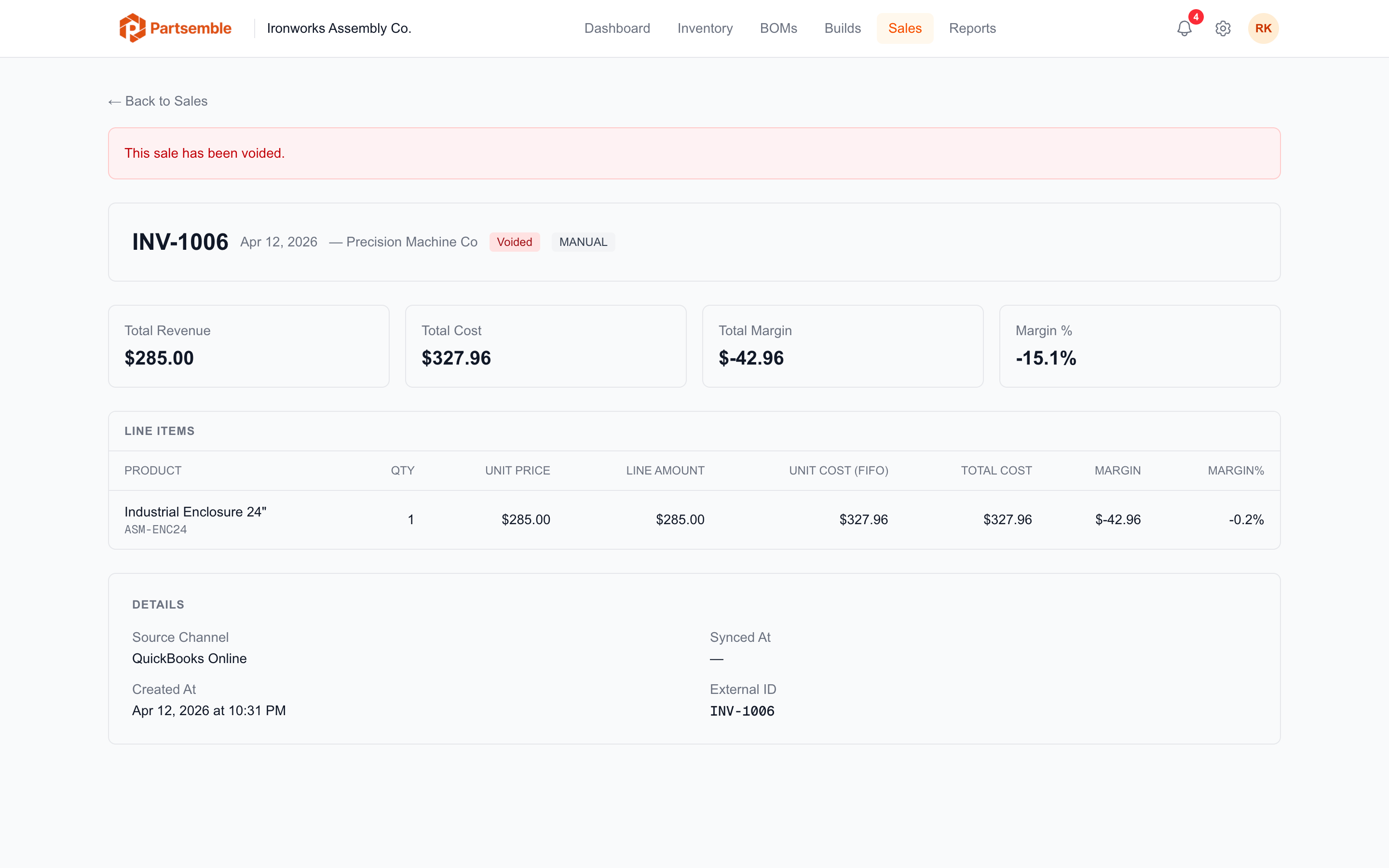
How Partsemble Detects Voids
During a sales sync, Partsemble checks for invoices that have been voided or deleted since the last sync. QuickBooks Online marks voided invoices with a status change and adds a private note indicating the void. Deleted invoices simply no longer appear in the active transaction list.
Both cases are treated the same way — Partsemble reverses the original sale.
What Happens When a Sale Is Reversed
When Partsemble processes a voided or deleted invoice, it performs these steps for each line item:
-
Lot consumptions are reversed. Every lot that was consumed by the original sale has its quantity restored. The
SaleLotConsumptionrecords are used to determine exactly which lots were affected and by how much. -
Stock on hand increases. The finished good's stock returns to where it was before the sale.
-
Reversal stock transactions are created. Partsemble creates
SALE_REVERSALstock transactions for the audit trail, so you can see exactly when and why stock was restored. -
The sale is marked as voided. The sale record remains in Partsemble for historical reference but shows a voided status. It no longer contributes to margin calculations or revenue totals.
Voided vs. Deleted
From Partsemble's perspective, voided and deleted invoices are handled identically — both trigger a full reversal. The distinction matters in your accounting system (voided invoices leave an audit trail there, deleted ones don't), but in Partsemble the outcome is the same.
Credit Memos
Credit memos are a separate transaction type that Partsemble syncs alongside invoices and sales receipts. A credit memo reduces revenue and can reverse inventory consumption, similar to a void. The key difference is that credit memos are their own transactions in your accounting system rather than modifications to an existing invoice.
Timing
Reversals happen on the next sync after the void or deletion occurs in your accounting system. If you void an invoice today and sync tomorrow, the reversal processes tomorrow. Until the sync runs, Partsemble still reflects the original sale.
What You'll See
Voided sales remain visible in the Sales tab with a voided status indicator. You can still click into them to see the original details and the reversal transactions. This preserves the audit trail — nothing is silently deleted.
In the stock transaction history for the affected products, you'll see the original SALE transactions followed by corresponding SALE_REVERSAL transactions, making it clear what happened and when.